Thursday, October 18, 2018

Ayyappa constitutes a separate religious denomination

Published in Vjayavaani.com


In a 4:1 ruling of the Constitution Bench that struck down an age old tradition at Sabarimala temple of Lord Ayyappa, the judges held that Ayyappa devotees do not constitute a separate religious denomination. The only dissenting judge Justice Indu Malhotra held that Ayyappa devotees do form a separate denomination.


This contradictory stance on religious denomination and the interpretation of the same having become vital in deciding the fate of this case, one is at a loss to understand why no thought or debate had gone into knowing what constitutes a religious denomination in the Hindu religion. During the hearing stage the judges asked how Ayyappa devotees constituted a denomination when there is no specific Ayyappa sect. This question seemed to have been guided by the opinion that Hindu faith has only pre-established denominations with zero scope to have developed new denominations over a period of time.

Even in the US 35 denominations were found to be present among the followers of Christianity when a survey was taken as recently as in 2001 by The Graduate Center of City University of New York. This was a great surprise to many but this shows the internally evolving denominations within a religion even in a modern society. Mr Sai Deepak appearing for one of the respondents rightly pointed out that the denomination must come from within the community, implying that courts cannot decide a denomination.

Evolving Hindu denominations.

A popular classification of the denominations within the Hindu community was last established by Adi Sankara which he collectively called as ‘Shanmatha’ – based on six deities namely Shiva, Vishnu, Shakti, Ganesha, Surya and Skanda. If this basis is any indication, Ayyappa followers rightfully form a denomination of their own, for, their worship methods are uniquely centred on the deity, Ayyappa.  

If we further analyse the Shanmatha concept, we find that two among the six were the children of another two of the six deities. As per Hindu tradition Ganesha and Skanda were the children of Shiva and Shakti! Though all the four can be clubbed together as a single family and are found installed together in most temples belonging to any of one of them as the main deity, Sankara had treated them as different denominations for the reason that worship methods and  religious austerities are different from each other and distinct for each of them. On the same basis one can say that Ayyappa constitutes a separate denomination

Before Shanmatha denomination came into being there were eleven denominations in the very country of Kerala, then known as Chera land where Adi Sankara was born. These eleven denominations are explained in a full chapter in an old Tamil text called “Manimekalai”, that was about a real life story centred around a young girl Manimekalai who went on to become a Buddhist monk after listening to the preceptors of the other ten sects. These eleven sects were,
1.     Parinaama
2.     Shaiva
3.     Vaishnava
4.     Brahma
5.     Veda
6.     Ajeevika
7.     Nikanta
8.     Sankhya
9.     Vaisheshika
10.  Bhuta (Charvaka)
11.  Bauddha

After going through the precepts of these sects, Manimekalai embraced Buddhism finding it more suitable for her. (Article 25 -1 was present at that time, it seems!) Of the eleven, only two (Shaiva and Vaishnava) have continued to exist till today and are part of Shanmatha. Two (Ajivika and Buddhism) were rejected by Hinduism later when they started distancing their doctrines from Vedic Thought. Parinaama, Brahma and Veda were absorbed by Shanmatha in various degrees. Sankhya and Vaisheshika are no longer in existence as separate paths. Charvakas always existed. This shows that denominations owe their existence to the followers. Some of them become redundant with time or are absorbed into others. There is also scope for newer denominations being born! What brings all these denominations under the Hindu Faith is their adherence to Vedas as the basis of their precepts and worship methods.

One must take note that four deities of the Shanmatha (Shakti, Surya, Ganesha and Skanda) were not treated as separate sects or denominations 2000 years ago in the Tamil lands. When they came to be followed by more people with exclusive worship methods, Sankara found it reasonable to accord a separate identity.

Further back in time, six Darshanas were the only denominations in existence. 
Sankhya, Yoga, Nyaya, Vaisheshika, Mimamsa and Vedanta were popular then of which Sankhya and Vaisheshika continued in Manimekalai period.  They are no longer in vogue today.  The concept of religious denomination is thus a continuously evolving feature testifying the vibrancy of a religion.


Is Ayyappa worship of recent origin?

This question is heard on the basis of recent origin of Pandalam dynasty in which was born Ayyappa, now worshiped at Sabarimala.  It is true that Ayyappa of Sabarimala was very much a real person who walked on this earth, like Rama or Krishna or Skanda who were also real entities. Hinduism recognises the elevation of real persons as Gods under one condition. There is a written record of this condition in the biography of Alexander by the Greek historian Plutarch.

To a question by Alexander, “How may a man become God?”, the Hindu sage Kalanos (Kalyan) replied, “By doing that which is almost impossible for a man to do.” When a person does things that no other man can do or which are beyond normal human limits, then such a person comes to be regarded as a God. Such persons have been celebrated as Gods by sages with mythical events woven around them. In course of time they come to be recognised as incarnations of the Ultimate God Himself.

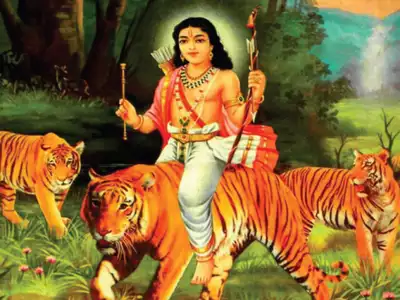
It is in this way Manikantha born in the Pandalam family was recognised as “Shasta”, the child of Shiva and Vishnu (in Mohini form). This is like how Skanda born to Meenakshi of the Pandyan dynasty was deified by the sages with a celestial birth and nursing by 6 star mothers of Krittika thereby getting him the name Kartikeya. Similar deification found in the legend of Ayyappa born as Manikantha is proof enough that his deification at Sabarimala was a well formed cult devised by some sages of the past for the benefit of people. With worship methods unique for Himself, He does constitute a separate denomination and can be regarded as the 7th matha of the Hindu religion.

In the light of the fact that Manikantha alias Ayyappa was a real figure having given instructions for worship, the Supreme Court’s ruling is certainly a violation of the promise given to him and his oath of celibacy. The tradition set with regard to the entry by women of the post-partum period for the first feeding of their children in five days every month is proof of non-discrimination against them, and at the same time without violating the oath. Without appreciating the finer aspects of maintaining the oath, Justice Nariman commented “What happens to the celibate nature of Lord Ayyappa in those 5 days? Is it that the idol vanishes on those days?”


Shasta is an old concept.


Ayyappa is known as “Dharma Shasta” – one who delivers Justice or who is an embodiment of Justice. A deity by this name in Tamilised form (Arap peyar Saatthan) is mentioned in verse 395 of Purananuru, an old Tamil text. The name Shasta (Saatthan) was common among the masses in Sangam texts. Worship of Shasta in many places was in existence from Sangam times.

A special feature of Shasta is found in two inscriptions and written by the Historian K.A.Nilakanta Sastri. Shasta is identified as a God of the Cheris (rural region) mentioned along with Surya and Seven Mother Goddesses (inscription no 335 of 1917 and 131 of 1892). The association with seven mothers was not indigenous to Tamil lands but had spread from Indus civilization (there is an Indus seal of seven women) with its later prevalence found in Chalukyan and Hoysala regions 1000 years ago. Shasta of Sangam texts was not accompanied with the seven mothers or any associate. This establishes the olden Shasta concept as a single - with additions coming later.  

The location in rural region is repeated in “Mayamatam” a Vaastu text containing the Vaastu principles purportedly given by Maya. After explaining the iconography of Shasta, the text describes the features of Shasta, the offspring of Mohini (female form of Vishnu) as a celibate and as a married man with two wives. Then it goes on to say that those who seek what is good, must install Shasta in villages. It also says that “Shasta, beloved of the gods, is to be installed in the haunts of lower castes, in the house of courtesans and in forts”.

The association with the downtrodden is a feature found in the astrological text “Prasna Marga” written in 1649 by a Kerala Nambhoothri. It says that those afflicted by Saturn must propitiate Shasta. Saturn also represents undeveloped and dirty regions. As such Saturn identifies Shasta as a village deity. It is a deity of all villagers. Those who have no idea of the village deity worshiped by their ancestors and those who were not initiated into any path of worship in Hinduism are also advised to worship Shasta – particularly of Sabarimala.

Even today scores of devotees going to Sabarimala are disadvantaged classes with no regular practice of religious austerities. The Vrata period is a kind of boon for them to commit themselves to religious austerities which otherwise they may not follow. The devotee is not expected to be well versed in scriptures. What is expected of him is to follow the rules of behaviour. There are other hill-deities too such as Venkateswara, Narasimha and Skanda. The first two come under one denomination and Skanda is another denomination due to varying practices in worship methods. But Sabarimala pilgrimage is different from them.

The Chief Justice refused to accept separate denomination for Ayyappa worshippers on the pretext that people of other faith also worship him. It is true that Ayyappa is worshiped by people from across all the other sects. The worshiper could come from any background, from other Hindu sects such as Shaivism or Vaishnavism or from any other religion. But every one of them must follow the rules of Vrata as applicable to Sabarimala! And that Vrata follows certain tradition of do’s and dont’s. That makes Ayyappa worship unique by itself. This in effect is a valid reason to treat Ayyappa worship a unique religious denomination. We don’t need an Adi Sankara to be born again to tell us this!

*********
Some salient features written by me in response to comments to my article in Vijayavaani .

Issue 1: The restriction on women is as though women are by nature seducers. It is also as an insult to the deity as though he cannot withstand temptation.


My reply: 

Certainly no Hindu book of Dharma says that women are seducers, but modern science says.  Dr. Louann Brizendine of the University of California and author of "The Female Brain” has said “About 10 days after the onset of menstruation, right before ovulation, women often feel sassier. Unconsciously, they dress sexier as surges in estrogen and testosterone prompt them to look for sexual opportunities during this particularly fertile period.” You can read the rest of the story in Live Science here: https://www.livescience.com/14421-human-brain-gender-differences.html


None of the Hindu Dharma Sastras that deal with menstruation speaks as above but only from the point of view of how the Smarta karmas can be carried out without any depletion in different situations like the woman in menses and persons whose close relatives have died. Yes, restrictions are there for death also.

With only Tamilnadu and Kerala still continuing to be the retainers of the original tradition of the Vedic society, please be informed, that even a road side temple of recent origin in a city like Chennai would close its doors if someone living in the close proximity of the temple dies. The temple would not be opened until the dead is taken out and the purifying rituals are done. Not only that, any person whose close relative had died cannot and would not enter a temple for a stipulated time period.

This is not an ‘insult’ on the deity and does not mean that the deity is not powerful enough to withstand the ‘impurity’. After all, the dead person is believed to reach His lotus feet. But what the person has left behind in this physical world in the destruction of his body of many sheaths is what causes these ‘impurities’. None of them can touch the deity, but we the ordinary mortals cannot draw the benefits from the deity if we allow these ‘impurities’ vitiate the consecrated energy in the temple. It is all because of this kind of strict adherence, the olden temples of South India are still able to retain their sanctity. 

Same with women’s menses period. If the wife has the period, the husband cannot participate or officiate a Vedic Yajna. This is still being strictly followed in South India. The reasons are quite scientific but what science has not found out. 

Issue 2: Custom and tradition can and in some cases, should be changed. They are Shastra, not the Veda, which is immutable and cannot be changed

My reply:

No one here has the right and the capacity to do the change. To quote Taittriya Upanishad "When in doubt on dharma please consult Brahmanas well versed in the Vedas, impartial and having a Dharmic bent of mind, and take their word as the word of the Vedas" In Sabarimala issue, the word of the temple priests and the acharyas is final. Just point out any one acharya who supports the change proposed by the SC. 

Issue 3: The tantri may object, but that is because that has become the established tradition over some time. 

My reply:

The ‘established tradition’ is known from Mahabharata times to say the latest. Drupadi was in her periods when she was brought to the royal court after the Pandavas lost the dice game. From what she spoke in the court, it is known that she was supposed to be secluded and not to be seen by the king and others who were her close relatives. The seclusion at that time was part of the Vedic life style, whose remnants are lost in all spheres today except in traditional temples. Let us not be party to the decadence setting in temples. 

Issue 4: There is nothing dharmic about excluding menstruating women from worship. The Veda does not call for that.. The criteria of purity, since when does menstruation qualify as 'impurity' ? It is the all important signal of creativity, the question of birth.

My reply:

Menstruation is not a signal of creativity. If it is signal of creativity, a new life would be growing inside the woman. I can pull out quotes from Tamil Sangam text to show that pregnant women till her time of delivery used to spend lot of time in temples in those days. But menstruation is the time of shedding of the dead ova along with dead material that would have gone into creating a new life otherwise. It is almost akin to the dead being removed. As I already wrote, no temple opens its doors until the dead is completely removed in its vicinity. So it is better to keep off from temple during that time.

Veda does not call for these. Quoting an authority (as what Taittriya Upanishad says), Paramacharya of Kanchi (Chandrasekaraendra Saraswati Swami), Rig Veda are mantras whose practical application are the Yajur Veda. They are about how to worship the deities praised by the Rig Veda. In the course of practical application done as Yajnas, there are Grihya sutras stipulating what to do and what not to do for the householder and his dharma patni. 

When the dharma patni has her periods, the husband cannot sit as the kartha in any vedic yajna. The beginning of the so-called ban starts here. With the yajna being a worship of the deity in energy form, the dead energy at the time of menses upsets the very purpose of yajna. The temples close their doors whenever a dead and decaying energy is emanating in its surroundings. The temples can be spared of that if the women keep themselves away to a distance of three- arrow shoots in olden times – so that their physical condition would not cause any hindrance to any Vedic rituals. 

Issue 4: People of other faiths also worship Ayyappa. More importantly, the Ayappa worshippers also worship other deities.

My reply:

So what? We must ask what determines a denomination and who worships. I have explained the criteria in the article and also the need to recognise it as a religious denomination with increase in importance for this deity with increase in devotees. Sankara had done that under similar circumstances.

To a question:  What does the sentence that all the extant Hindu sects follow the basic Vedic principles mean?

My reply:

It means that only those sects that swear by Vedas and adhere to the Vedic version of Brahman are considered Vedic / Hindu sects. In the reference to 11 sects I quoted from Manimekalai, Buddhism and Jainism were initially Vedic at that time. When they delinked from Vedic Thought they were rejected by the Vedic society.

For example Mamimekalai’s father Kovalan was married to Kannagi in Vedic marriage. But his father took to asceticism of AjIvika because it was an off-shoot of Vedic Thought at that time. But later Jainism was rejected by the Vedic society as known from Sambandar’s role in banishing it from the kingdom of Koon Pandya. Similarly Buddhism which was originally an off shoot of Vedic Thought was rejected when started deviating from that.  I suggest a reading of the 2nd section of the  2nd chapter of Brahma surtas with the commentary by Adi Sankara or Ramanuja. The entire section is about how a Path that does not stand by Vedic concept of Brahman as the First Cause must be rejected. The Nyaya, Vaisheshika, Buddha, Jaina and Pashipata sects are rejected in this section for the precise reason that they did not adhere to Vedic Thought. 

Finally on the restriction to women in Sabarimala: I believe the above explanation gives the rationale – that woman cannot undertake 41 day vrata in their menstruating age. I have seen women in the houses of men in the vrata period, not even staying at home when the men are doing puja at home. I have seen them staying away from their house at that time. Such was the care taken by women that vrata should not impaired. Today Sabarimala is the ONLY temple exacting such commitment from the people. Would anyone in the know of these things accept the support for violations? 

Wednesday, October 3, 2018

Hindu value system – the victim of the two judgements.

Published in PGurus on 3rd October 2018.

The two recently passed judgements by the Supreme Court of India, one on adultery and the other on the entry of women of menstruating age into the Sabarimala temple are supposed to have set right the wrongs done to women. The first one has decriminalised adultery for the sake of ‘gender neutrality’,  for, now the woman committing adultery is released from the clutches of her husband as her paramour no longer requires the permission of her husband to commit adultery! So the judgement has relieved the woman from being treated as the property of the man. The second judgement is said to have ensured ‘gender equality’ by eliminating a discrimination against women imposed by patriarchal religious practice.


The media is agog with stories for and against these two judgements but what is missed out is that both the judgements have trampled upon the value system of majority of people of this country. Experts would come out with jargons and judicial terms to support the judgements, but as a lay person I would say that any judgement should be representative of the value system of the country. It is to protect these value systems we have the judiciary and not to derail them.

The value system at the receiving end in the adultery verdict is the age old and still continuing concept of the marriage oath in the Hindu society which is centred on “Saptapadi”, the seven steps. The man and the woman enter into lifelong commitment to each other by taking seven vows in seven steps in which the 3rd vow is on fidelity to each other. The completion of the seven steps with seven vows makes the marriage legal in the Hindu society. One of the vows being fidelity, adultery committed by any one of the two must be considered as a crime. Only when the element of criminality is included, any temptation to commit the crime can be nipped in the bud. Law is not just meant for giving justice but also to play deterrence. However the judges turned into social scientists when they announced their discovery unsupported by data that adultery is not the cause of unhappy marriage but the result of unhappy marriage!

Section 497 by itself is a violation of the Saptapadi vow and by scrapping it the violation has been remedied but the crime is not checked. None of the judges except the lone female judge Justice Indu Malhotra seemed to have realised the aberration caused by scrapping the section when she questioned whether adultery can be brought under criminal offence, but restricted it to situations “where there is a public element in the wrong, such as offences against the State security and the like.”

One is at a loss to understand why this is not applicable to the entire society. The Hindu majority is still steeped into the value system of mutual fidelity and the law givers are expected to reflect that system and not create ways to encourage violation of the marriage oath. The first victim of this verdict is reported from Chennai. The husband had no qualms in telling his wife that she could not stop him from having an affair, by quoting the SC verdict on adultery. The CJI claimed in his ruling that adultery could be a ground for divorce. But the poor woman could not understand how sympathetically the court had devised ways for her benefit! She committed suicide instead. Ethically who is the first abettor for this suicide?


Source: Times of India, Chennai edition, dated 1st Oct 2018.


The second judgement pertaining to Sabarimala pilgrimage was justified by CJI Misra on the basis of ‘gender equality’ and aimed at demolishing patriarchy in religion. Referring to the restriction on menstruating women he said, “Any rule based on biological characteristics cannot pass muster of constitutional test.” If the issue is about the biological characteristics of the woman, did he or anyone in the Bench care to assess the impact of those biological characteristics on women due to the pilgrimage?  Without doing that they have just passed a verdict that is once again a travesty of the value system of the Hindu society.

This value system takes utmost care of the woman’s health and had done the needful to reduce menstruation related health issues which modern science has not even thought of. Women were kept away from all chores on those days not because they are unclean but they needed rest. The impact of physical work was only recently acknowledged by sports committees on seeing that nearly 25% of the elite athletes suffer from menstrual dysfunction. A Consensus Statement on treatment and return to play was made in the US only in the recent years. In contrast the age old Ayurvedic system of India has remedies in the name of Rajaswala paricharya which is common household knowledge in India even today though it is on the wane in modern households.

The effect of going away from the traditional system of rest is felt in the reproductive disorder commonly understood as ovarian cyst. Recently a study by AIIMS claimed that one out of four women in the reproductive age is suffering from ovarian cyst (PCOS). Though no study exists to relate it to the changing lifestyle in disregarding the Rajaswala Paricharya, a comparison can be shown with the women of the past generations, our own grandmothers. They had produced not less than five children each, many a times more than that number. But today a quarter of the women population of India are not able to reproduce due to PCOS. What could be the reason for this sudden deterioration within a span of two generations? The only difference exists in the way the present generation treats their menstruation period.

Today in the name of equality women are brainwashed to do everything that men do which is in addition to what they do as women only. There is a gender inequality by Nature in women that nearly 80% of women are undergoing heath related premenstrual symptoms according to a publication which no man undergoes. Can the judiciary find a remedy to this inequality?

Recently in an article to Live Science, the researcher , Dr. Hilary Critchley with more than 40 years of standing in the study of menstruation lamented that the implications of menstruation on women’s health is not at all being studied. Such being the status of the academic understanding of this biological issue of the woman, out honourable judges are able to pass judgement on the biological issues of woman in an issue which would primarily impact her health – if she takes up the arduous austerities and a long journey by foot to Sabarimala. Opponents would easily come up with a solution to cut short the austerities and the journey. But that is a blatant interference in the right to religious practices.

The value system under discussion is not just the care for menstrual health of the woman in the Hindu society but also the respect for temple culture that is in vogue for a known period of more than 1500 years in South India. The temple culture is the Heritage of our country and age old rules are still being in vogue, one of them being non-entry of women during menstruation period. If this is termed as pollution, yes it is.

Biologically dead material including the dead ova is being expelled from the body during menstruation. Anything dead-related is not allowed near the temple. For example, if a person dies in the close proximity of a temple, the temple would be closed till the dead is taken away. Even if someone dies at home, the occupants of the house would not go to the temple for stipulated number of days. From this we can even reason out why temples are closed at the time of eclipses which are supposed to be the best time for offering oblations to the departed ones. From the rationale of abstinence of women from entering the temple during menstruation we can assume that similar effect on the temple-chemistry is anticipated during the supposed-arrival of departed ones.

This kind of abstinence is more about retaining the temple’s sanctity than about a stigma on the women or others. Even rivers are said to have menstruation period according to traditional Hindu wisdom, which is nothing but the early period of fresh arrival of waters in the rivers (in the month of June). The first waters would be bringing in lot of dirt spread on the until-then dry river bed. So it is better not to use that water. Only after the water starts flowing well in the next few days, the river is said to have finished her menstruation. The practices are no doubt well-thought out but lack of knowledge of the inner purport makes us think that they are absurd dogmas.

All Hindu theistic women respect this culture and voluntarily refrain from going to temples during their menstruation period. The austerities of Sabarimala pilgrimage is such that woman in reproductive age cannot follow them and make a trip without harming her health. Such deep thoughts had gone into devising the rules of this pilgrimage by our ancestors. It is regretful that the judiciary is not standing up as a custodian of these values. With Justice Indu Malhotra being the only voice reflecting the values dear to the Hindu women in the both the judgements, one is tempted to ask if it is time we must demand all-women bench to hear the cases that affect all women.


Related article: Ayyappa constitutes a separate denomination


Wednesday, September 12, 2018

Hydrological secret in Ganesha worship

Earlier published in Ind Samachar
&


Has anyone wondered why the famous shloka on Lord Ganesha starting as “Gajānanam Bhuta Gaṇādi Sevitam” (गजाननं भूतगणादि सेवितं) talks about the food for Ganesha in the very next line before anything else? This food is not even the popular ‘modak’ usually offered to Ganesha. It is “Kapittha Jambu Phalasāra” (कपित्थ जम्बूफलसार) – the core or essence of the fruits of wood apple and jamun. These two fruits are of an odd variety and not exactly sweet. But their trees must have been found in plenty at some time in the past, known from the fact that our country is part of ‘Jambu-dveepa’ – the vast land of jambu trees. An investigation into the origins of the offering of these two fruits to Ganesha gives some surprising but well-thought out ways of our sages in preserving the knowledge of the water sources, yes, you read it right, water sources.


Ganesha and water sources have an intimate connection. The present generation can only think of water in the immersion ceremony of Ganesha idols marking the end of the festival. But the old timers would recall Ganesha idols installed near water ways. Wherever there was a water body, say, a pond or a tank and however small it may be one could find Ganesha kept under a tree near the water body. In most locations, it was the peepal tree grown naturally near the water way. This was a common sight in south India where the temple culture didn’t suffer ruination like in North India where foreign invasions had wiped off most temples since thousand years ago. Unfortunately today most water-bodies are made into habitations, but Ganesha temples have survived within buildings. The shloka on the offering of kapittha and jambu fruits is the last reminder of the water-connection with Ganesha worship. 


The uniqueness of these two fruits is that they grow in places where there is underground water. They are called "Jalanādi" – water-veins. South India is particularly crisscrossed with a net work of underground passages -perhaps formed by the oozing lava at the time of formation of the Deccan Plateau. These passages are filled with rain water during the rainy season. At places where water runs for most part of the year, certain trees are found to grow near them. Approximately 50 such trees identified by our sages were recorded by Varahamihira in his book, Brihad Samhita (chapter 54). Where the water flow is abundant and near the surface, ant hills are formed and trees such as Kapittha and Jumbu grow in specific distance and direction from the Jalanādi and the anthills.

Kapittha fruit (wood apple)

Identification of the Jalanādi by means of trees is not unique to South India alone as the original idea of these trees was given by none other than sage Sārasvata, according to Varahamihira. From a narration found in Mahabharata (Shalya parva - 49) it is known that this sage was born and had lived near the river Sarasvatī. Once there was a drought for twelve consecutive years making all the sages leave the region of river Sarasvatī. But Sārasvata had stayed back and survived through the drought and kept up his Vedic practices.

This narration shows that Sarasvatī was a rain-fed river and not sustained by the snow-clad Himalayan Mountain. The drought for 12 years had made the river bed go dry, but sage Sārasvata had managed to draw water from the underground channels of the river by means of the presence of certain trees. Whatever he had discovered was passed on for generations and finally recorded in Brihad samhita in 98 verses.

According to Sārasvata, if there is a naturally grown Jambu tree, there will be water at a distance of 4-1/2 feet to the north of it, and the water will be running at a depth of 12 feet. If an ant-hill is found to the east of the Jambu tree, water source is to the south of the ant-hill at 12 feet depth. In the case of Kapittha tree, one must look for a snake hole 10-1/2 feet to the south of it. If there is one, it means water is available in the northern direction of the hole.

In this way, underground water sources were identified by means of certain trees. Our ancestors had naturally thought it fit to safeguard these ‘markers’ (trees) by assigning some divine importance to them. Kapittha and Jambu were made the offerings for Lord Ganesha. He was given a home under the Peepal, banyan and neem trees as they are first-rate markers for water sources. Plenty of water can be found near these trees. One can find them near the tanks of old temples like the famous Mariamman Teppakulam in Madurai. Though built in the 17th century, it is said that the 7 foot high Mukkuruny Vinayaka, now housed in Meenakshi temple, was found while digging this tank. This reiterates the view that this idol of Ganesha was installed long ago in that region as it was found to hold a water vein. Most of the old temples of Ganesha have legends connected with water.  

Mariamman Teppakulam, Madurai


In this backdrop the episode of Arjuna giving water to Bhishma on the arrow bed, by shooting an arrow at the ground looks very much part of the knowledge of Jalanādi. Mahabharata describes that the arrow shot by Arjuna standing on his chariot hit the ground on the south of where Bhishma was lying and from that a jet of water came out. Perhaps he had located the water source from a ‘marker’ tree which acquired his name as ‘Arjuna’ (Terminalia arjuna) after this episode! Sārasvata says that an ant-hill found to the north of Arjuna tree is the indicator for water to the west of the ant-hill at a depth of 21 feet. Perhaps during his circumambulations around Bhishma before shooting his arrow, Arjuna had observed the surrounding areas for the tree and anthill.

When will we realise the secret behind these trees? When will we realise that installing deities like Ganesha and Snakes under the trees and near ant-hills has a superior wisdom running through them?

Picture source: HERE


The protection of the trees and also the anthill are vital for identifying the Jalanādi. The practice of sprinkling milk in the anthills where snakes reside can perhaps be traced to an ecological reason. In summer the Jalanādis would dry up, thereby making the underground dwelling of the snakes hot enough to drive them out. When people regularly worship the snakes in the anthill by offering milk in the holes, the snake- dwellings would remain cool in summer also. This makes the snakes remain in their dwellings and not venture out posing a threat to the people.

This goes to show that our ancestors had evolved methods of worship keeping in mind the psychology of people. Today none of the trees mentioned by Sārasvata are found in abundance and no water ways are identifiable now due to destruction of these trees. At least now we must look around and rebuild Nature as it once existed.


Janmashtami from a cosmic angle.


Earlier posted in Ind Samachar

Janmashtami or Gokulashtami is the celebration of birth-tithi of Sri Krishna. This is different from the general practice of celebrating birthdays on birth stars though certain sections of Hindus continue to celebrate Krishna’s birth day on his birth star, Rohini. Same is the case with Rama’s birthday which is celebrated on Navami tithi. Certain other tithis also stand out exceptionally connected with deities like Ganesha, Subrahmanya and Shiva. Different schools of thought do exist giving the rationale behind the choice of tithis for those celebrations. This write-up draws attention to these tithis with an astrological feature, related to comparative motion of the sun, the moon and the earth.

Before going further let us know what a ‘tithi’ is. It is the distance of 12 degrees travelled by the moon calculated from the position of the Sun as seen from the earth. The starting point is the conjunction of the moon and the sun (Amavsaya). The distance between one conjunction to another is a circle covering 360 degrees. This distance is travelled by the moon in 30 days. So in one day 12 degrees are covered. This duration of 12 degrees is known as a tithi. In effect a tithi refers to a certain part in the path of the moon which is not fixed always but keeps shifting in relation to the location of the sun as the moon moves along with the earth around the sun.

There is a concept called ‘Paksha Chidra’ in astrology which refers to certain spots identified by certain tithis in the motion of the moon around the earth. They refer to weak points or some defects on the path of the moon around the earth in both waxing and waning phases (paksha). These are the 4th, 6th, 8th, 9th 12th and 14th tithis in both the phases of the moon. One is advised to avoid starting new ventures or conducting auspicious functions on these tithis. This is on the astrological side.

In real terms of motion in the sky one can notice some interesting correlations. The combined pull of the sun and the moon continue to be on the earth in varying degrees through all the phases of the moon. The well known tithis of such influence are Amavasya and Pournimasya (No-moon and full-moon). Their impact on oceans on these days is a reminder of how our own body is susceptible to the influence from those two celestial bodies.


Another location of the moon in relation to the sun has a reversal of the above kind of pulling effect, though the two would still continue to exert their full force on the earth from that location. That location corresponds to Ashtami tithi! In the following illustration ashtami tithi can be seen to correspond to a point in space where the moon will be at right angles to the sun with reference to the earth.


It can be alluded that the combined effect of the sun and the moon on the earth will be the lowest on ashtami, but that does not mean nil effect as the earth can be seen being pulled in different directions simultaneously. The impact on this day would certainly be different from all the other days which science had not yet probed. But this tithi being identified as a Paksha chidra, or a defective day lends credence to the possibility that there is some un-discovered negative effect on this day on the earth and its liquid elements which include the liquids in our body too.


The other tithis of this group imply a negative effect in astrology but have never been probed scientifically. A look at the probable location of those tithis show that the mid-point between Ashtami and Full-moon / New Moon must be wielding a different effect - of negative kind as they are classified as Chidra tithis (4th and 12th). The 12 degrees that precede New Moon and Full Moon are weak ones (14th tithi), so also the 12 degrees after Ashtami (9th tithi). The 6th tithi is also part of this group.


The defective tithis of the above illustration shows a periodic struggle between the sun and the moon, which our ancestors have noticed as ill-effects on mankind on those days. Our sojourn in the sky on these tithis seems to be in need of some divine protection. Or it could be to do with avoiding mundane chores.  It can also be assumed that the luni-solar effect on Chidra tithis enhance mental concentration for spiritual realisation. This is supported by the fact that austerities like fasting and / or meditation are done on these tithis.

The way our ancient sages have devised austerity-based celebration for various Gods on these tithis of Paksha chidra underline some un-discovered facts of science impacting our mind and body. Modern studies say that periodical fasting is good for health. But tithi-based celebrations show that fasting is supposed to yield better results on specific days identified by the location of the Moon with reference to the sun.

By naming those tithis as Chidra tithis, they have indicated some disturbance too. It is as though by the blessings on Lord Ganesha, we cross the Chathurthi, with the blessings of Lord Subrahmanya, we cross Shashti and with the blessings of Lord Vishnu we cross Dwadasi and of Lord Shiva, we cross Chaturdasi. Every fortnight we remember these tithis and pray respective Gods.

Ashtami and Navami are completely away from this group as they exhibit different kind of luni-solar effect on the earth. In an amazing coincidence the two celebrated Gods of India were born in these tithis. So the sages have found it fit-enough to celebrate their birthdays on their birth tithis than on their birth stars, which is a normal practice. Gokulaashtami and Rama Navami are both celebration times and times for Spiritual thought and religious austerities.

The astrological text, Kalaprakasika says that fasting must be done for the duration of the tithi by those desiring material benefits. This implies a connection between the tithi and fasting – a fit case for scientific probe. By their intuition the sages have given the knowledge of defective tithis and also the ways to convert the defect into an advantage. Let this knowledge and practice inherited from them live on forever!


Friday, August 31, 2018

Kerala floods caused by the ‘wrath’ of the deity?


Earlier published in PGurus.com
and

At a time Nature-induced unprecedented tragedy is sweeping across both human and divine abodes in Kerala, the question in the air is whether this is the result of the wrath of the deity at Sabarimala for interfering with the rules of the temple and taking it to the court to decide. The judges of the Supreme Court had reserved their orders, but did Lord Ayyappa deliver his judgement by making His abode inaccessible to all?


This is not the first time we are hearing this kind of justification for natural calamities. When the temple of Sri Raghavendra Swamy at Mantralaya was submerged by the floods of Tungabhadra in 2009, many people wondered whether it was related to the dismantling of the temple of Manchalamma, the family deity of Sri Raghavendra Swamy to provide place for his Brindhavan.


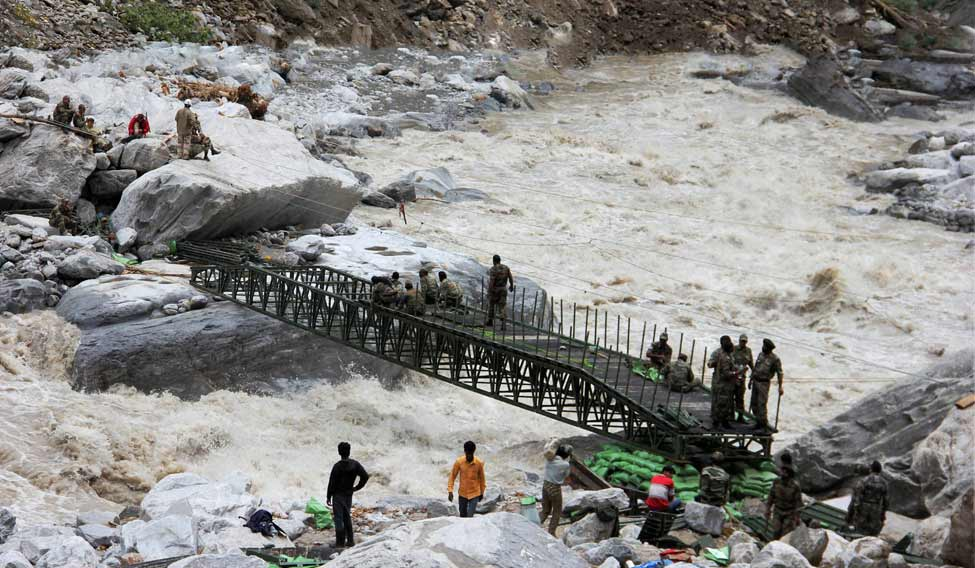
Similarly when a deluge struck at Kedarnath temple in 2013 caused by a cloud burst, many people attributed the resultant destruction to the wrath of Dhari Devi whose image was removed from her shrine just the previous day for the purpose of facilitating water storage for Alakananda dam under construction.


Linking natural disasters to the so-called ‘wrath’ of the deity is certainly disquieting in this age of reason. It also throws bad light on the deities in general and on Hinduism in particular. It raises many questions on the very concept of deities as benefactors and the way they ‘behave’ much like human beings in retaliating when things go wrong for them. The ultimate question is whether this is what Hinduism seeks to convey. This article is an attempt to answer these questions through two concepts, the concept of portents and the concept of deities as living consciousness.

Portents.

Portents are signs or omens that are supposed to indicate a calamity. Ancient sages of India had studied occurrence of such portents and found a link between an event and a violation or an event and an after-effect. Varahamihira in his treatise called Brihad Samhita had compiled the portents taught by sage Garga to sage Atri in the 46th chapter of this book. These portents are basically related to the deities in the temple and the natural calamities caused by fire, rainfall, water (of the rivers) and wind that foretell the hardships to the people at large. According to the Vedic sages, they do indicate the displeasure of the deities. This concept seems to have thrived in the Hindu society for all these ages.

But this doesn’t clear the sullied image of the Hindu deities as angry ones and those who can be displeased. Are these deities ordinary mortals who show their displeasure when things don’t happen in the way they like, is the question that comes to our mind. Without stepping into theological realms, we can answer this by visualising the relationship between the deities and human beings in the same way how different elements of the earth behave.

The earth behaves like a single unit or a unitary cell. Whatever happens in Nature in one part of the earth has its impact in another part of the earth. The wind, the heat, the ocean currents, the atmospheric changes and the like do behave as parts of a single cell and interact and influence each other with the final result sinking on the earth impacting human life at some place in some way. This concept is almost accepted by the scientific community.

Our Vedic sages had gone beyond this level of understanding and treated the earth, the atmosphere and the stellar space as one unit- Bhu, Buvah and Svah –  because whatever happens at one impacts the other. A 4th component ‘Mahat’ was discovered by sage Mahachamasya, that encompasses all the three (Taittirya Upanishad 1- 5.1). This fourth component is known as Brahma or Atma or we can name it as consciousness for our understanding.

This consciousness pervades all the three levels starting from the earth in the same way how our consciousness pervades our physical, vital and mental state of our own existence. Anything that happens in any part of our body would send a signal throughout the body and different parts of our body would react accordingly. This concept is applicable to our larger frame of existence, constituted by Bhu-Bhuvah-Svah. In this larger frame, every entity including human beings, animals, birds and even natural forces react or adjust with each other to attain a state of equilibrium – which at times appears as portents.

Consciousness as binding factor.

Though Hinduism is vast source of theological concepts on Gods, the underlying feature is that deities are living consciousness. The installation of the consciousness happens in two ways. The Universal consciousness is installed through mantra, yantra and tantra in temples. The consciousness of those who once lived in flesh and blood is also installed by the same means. This is based on the logic that nothing ceases to exist in Nature.  The feeling of I-ness, emotions, aspirations and thoughts that were very much real while alive cannot disappear into nothingness. All these as part of the consciousness are expected to live in a place while deified.

This is the idea behind many deities of Kerala, village deities and roadside deities who are supposed to guard from accidents those who seek blessings from them. These deities were once real persons who died while saving someone from death. Until a century ago this practice of deifying someone who died under distress was in vogue.

Lord Ayyappa was a historical person who has been deified due to the exemplary nature exhibited by him while alive. A major difference between Lord Ayyappa and other deities is that strict discipline is maintained both in the case of upkeep of temple and also in the lifestyle of the devotees who plan to visit the temple. This creates a kind of entanglement between the deity and the devotees in such a way that if anything upsets the equilibrium, it gets a reactionary manifestation somewhere.


A comparable incident can be quoted from Silappadhikaram, the Tamil Epic on Kannagi who lived 2000 years ago. It tells about a time when the door of the Durga (Meenakshi) temple at Madurai could not be opened. This was perceived as the anger of the deity and a search was on to find out the wrong committed. It was found out that an innocent Brahmin was wrongly confined and only when he was freed, did the temple door open automatically.

This shows that the stronger the power of entanglement between the deity and the devotee, instantaneous would be the result of the violation committed to anyone one in the entanglement.
These nuances help us to answer certain questions before us.

1. Many mistakes and wrongs are reported in many temples. But nothing of the kind of ‘wrath-manifestation’ happens in those places. So the whole idea of Lord Ayyappa showing his displeasure is wrong and silly.

Loads and loads of violations and wrongs are being done in most temples. The sanctity of those temples is definitely afflicted. This is certainly in contrast to Lord Ayyappa temple where strict adherence to discipline is followed. When it is violated, it is immediately detected through Prasna and rectified. This temple stands on a different plane.

2. Floods and natural calamities are seen in many other places too. Which deity is responsible for those calamities?

A deity is primarily a manifestation of consciousness of high level. This consciousness is present everywhere, even in the natural forces around us. When we are upsetting their equilibrium, they pay us back. The environment pays us back. Which deity was responsible for the Chennai Floods of 2015? It was the environment that showed its fury. As part of the environment we failed to act in unison with Nature as collective consciousness. The closing of waterways and damage to land paid back as ‘anger’ or ‘displeasure’ of the deity (Nature).

3. Kerala is in the front of receiving excessive rainfall all these years. It always stands the risk of floods and devastation caused by floods. Why connect such a natural occurrence with a deity?

Kerala had been receiving incessant rainfall almost on all years. But never in the known past of 100 years was a devastation of this extent experienced. When it happened, we look out for the causes. And there exists a cause now in making a tradition and discipline of this temple subject to judicial scrutiny. Never in the past had anyone dared to question the tradition of this temple. When it was questioned, a calamity broke out. This is as simple as that.

However the liberals would not take any of these ideas. Our only word for them is that at least by thinking in these lines people get awakened to a collective conscience of a responsibility towards our environment. Hindu Thought dictates that everything in the environment – including animals like cows are part of the entanglement of the consciousness. Let people awaken to the consciousness in everything, both sentient and non sentient and be aware of their right to existence and their right to their own tradition and not just the right to one’s own self-interest