Wednesday, March 10, 2021

Is Kali Yuga a fabricated concept? A background analysis (Supplement to Mahabharata date series - 5)

Previous

Next

How many of us know that the date of Kali Yuga, 17th or 18th February 3102 BCE, is a Western creation? The Wikipedia article on Julian day has a word on the identification of the beginning date of Kali Yuga calculated by Ebenezer Burgess, a US Missionary to Western India. It was given in the Julian Period.[1]


That date is religiously quoted by the Indic academia, while some Mahabharata researchers are of the opinion that this year is from the Gregorian calendar without the zero year. The foot note for this date says that the Julian days were given to Burgess by the US Nautical Almanac Office.

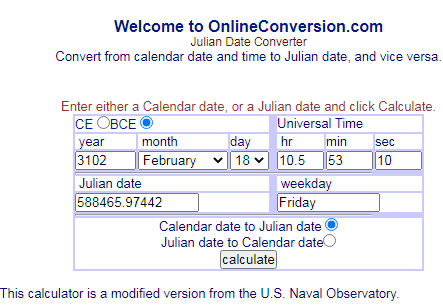
At the time of Burgess the US Nautical Almanac Office was engaged in defining the ‘Astronomical Unit’ used for measuring distances in space.[2] Only Julian days are used for all astronomical purposes. It should be known that the Julian year is the basic unit in Light Year calculation. To confirm that the Kali Yuga date given by Burges is Julian calendar date, I checked it in the converter. It shows that 18th February 3102 BCE is indeed the equivalent of the Julian day given by the Nautical Almanac office. We, the Indians have been given a date for Kali Yuga in Julian calendar, a calendar not in use in India and not reflective of the native Vedic calendar used by us. Needless to repeat here the mismatch between the Julian day and the Vedic sidereal day, already explained in Part 4
Professor K. Srinivasa Raghavan identified Bentley as the discoverer of this date who used the traditional “astronomical Kali Yuga” (!) combination of five planets at the beginning of the zodiac to get this date. The zodiac under reference is the beginning of Aries.

Bentley and others did not accept the date they had derived by saying that such a date was an extrapolated one and hence did not exist. Nevertheless this did not stop the Indic researchers from adopting it as the date of Kali Yuga, while at the same time doubting the very concept of Kali Yuga.

This date was rejected by Prof. Raghavan who thought that the conjunction of the planets at the beginning of Aries is erroneous. He towed the stance of the western writers that it was an invention of the astronomers of the early A.D years.  It seems Aryabhatiya did not gain wider reading in his times.

He however invented two types of Kali Yugas – the ritualistic Kali Yuga and the Astronomical Kali Yuga - without any citations. Jyeshtha Amavasya was identified by him as the beginning of the ritualistic Kali Yuga. His justification for this is a Tamil phrase “Kettai Moottai Sevvai Kizhamai” – a reference to “Gandanta” or conjunction of the stars Jyeshtha – Moola happening on a Tuesday. Astrologically it is disruptive for starting any work. But he assumed it to be referring to the birth of an evil epoch (Kali Yuga)

Perhaps seeing none to follow this Ritualistic Kali Era, he proposed the Astronomical Kali Yuga to have started on the day of Magha Shukla Pratipat on the belief that Lagadha had referred to it in his Vedanga Jyotisha.[3] He identified the Astronomical Kali Yuga when five planets congregated at Mid-Dhanishtha on 11th January 3104 BCE. There is no reference to any planetary position in Lagadha jyothisha, nor any indication in that text or any other text about all planets congregating at Dhanishtha marking the beginning of a yuga. 

Yet Raghavan assumed it to be so and proposed the Astronomical yuga which did more damage than ever before. This yuga not in tandem with the true Kali date became a handy tool to denounce the true Kali Yuga. Whenever you come across someone flogging at the true Kali Yuga as a mere ‘Astronomical’ yuga for computational purpose, know that it’s root started from Raghavan’s yuga at Dhanishta in Kumbha Rashi not at the beginning of Mesha Rashi (Aries). 

It seems Raghavan felt compelled to show a congregation of the planets - not at the traditionally held location but at the Uttarayana point of the time of Lagadha given in Vedanga Jyothisha. There is no pramana for both these Yugas proposed by him.

He made his calculations of the planetary longitudes in Julian days for his Astronomical Kali Yuga on 11th January 3104 BCE. The Kali day was derived in Julian days only. A sample calculation is shown from his book.

Simple arithmetic.From the known position of the planet near his time (1968 in the above calculation for Rahu), he extrapolated to the 1st day of Kali in Julian days to 18th February 3102 BCE. The difference between this Kali Date and his Astronomical Kali date being 768 Julian days, he calculated for those 768 days and added it to the previous result to get the planetary position. In effect his calculations were extrapolations only – a criticism he told of the Siddhanta writers.

He used the lunar tithis to locate the Uttarayana and Vishu points of the sun. For instance, taking Jyeshtha Amawasya at the beginning of Jyeshtha star he kept adding the days in of lunar tithis that finally led him to Rohini for Vishu at 17 degree Taurus. This kind of calculation led him to a time line as follows.


From Pandavas entering Hastinapura and Draupadi’s marriage, every event of Mahabharata occurred after his Ritualistic and Astronomical Kali Yuga! This chronology led him to 22nd November, 3067 BCE as the date of Mahabharata war. This date has been endorsed / taken up by Dr. Narahari Achar and others following him.

What Prof. Raghavan had showed in Julian days was simulated in Julian day based astronomy software by Dr. Achar and Dr. Manish Pandit.

The bottom line is

The traditional Kali Yuga was dumped.

Perhaps this paragraph by Richard Solomon best summarizes the thinking of the current crop about Kali Yuga.[4]


Salomon continues to say, “In use as in origin, the Kali Yuga is primarily an astronomer’s era; it is used only occasionally for civil and epigraphic functions.” The same is echoed by Dr. Achar.

I leave it to the readers to pick out the similarities in thought about Kali Yuga between then and now and between them and them.

But the question comes up – if the super conjunction of all the planets can be computational from the current knowledge of the planetary movements, should it not have existed in the past? Why then doubt it? Is it because it cannot be simulated in the astronomy software? To answer this, begin reading from the 1st part. There is an answer to this.

I must make a mention about Mr. Nilesh Oak’s version here. He didn’t know the connection between the Mahabharata date and the Kali Yuga date at the time of writing his book, but later on felt compelled to do something about it that he is now on the way to ‘discovering’ a date of Kali yuga to match with his date of Mahabharata of 5561 BCE.

Seeing all these I am led to think that the best way to start my discourse on Kali Yuga is with the two verses of Bhavishya Parva of Hari Vamsam on the nature of Kali Yuga as it intensifies.

Without any supporting evidence (Pramana), Ritualistic Kali Yuga and Astronomical Kali Yuga were invented and propagated around.

Without knowing that Time was expressed in Kali years until the Gregorian calendar had taken over the country, it is being postulated that Kali Yuga was astronomer’s computation.

Having said that it is computational, the absence of Kali Yuga during Mahabharata war is resisted by citing a verse that Kali Yuga arrived when Bhima killed Duryodhana by an adharmic blow. Is Adharma computational?

If Bhima hitting Duryodhana in adharmic way signals the entry of Kali Yuga, why not cite the verses of Krishna to Karna at the end of the peace mission, that it would not be Satya Yuga or Treta Yuga or Dvapara Yuga but only Kali Yuga when Arjuna and other Pandava brothers destroy the Kauravas?  Was Satya or Treta Yuga running then to make this kind of observation?

Without the minimal knowledge of scriptures that Krishna and Balarama were avatars of Dvapara Yuga and not Kali Yuga, they were made to live in Kali Yuga in these researches.

After having made them the avatars of Kali Yuga why bother about pushing a Kali date at the time of war by citing the sandhi verse?

The 9th verse of the 2nd chapter of Adi Parva says that the encounter between the armies of the Kauravas and the Pandavas took place at Samanta-Panchaka in the interval between Dvapara and Kali Yuga. What was this time? When did Dvapara end and Kali Yuga start?

If this was in computational years, why is it said in the same chapter in the 3rd verse (before the Dvapara- Kali sandhi) that in the sandhi (conjunction) between Treta and Dvapara Yuga, Parashurama killed the Kshatriyas in the same place? Was that also computational?

Parashurama being a contemporary of Rama, Ramayana had happened closely to this sandhi period. The historical presence of Samanta-Panchaka at a decipherable time close to Mahabharata makes Ramayana closer in Time to Mahabharata and not away in lakhs of years that a Maha Yuga is supposed to be of.

This closeness also reveals that the Yuga reference in the sandhi period is something else and not computational – to use their nomenclature – ‘astronomical’.

Let me unravel these in the next part from the scriptural point of view besides establishing the Kali date mathematically.

(To be continued)


[3] Prof.K. Srinivasa Raghavan, (1969) “The Date of the Maha Bharat War and the Kali Yugadhi” Page 2 in the Chapter “Determination of the Date of the Astronomical Kali Yuga Era”. https://archive.org/details/dateofmahabharat00srinuoft/page/1/mode/2up

[4] Richard Saloman, “Indian Epigraphy: A Guide to the Study of Inscriptions in Sanskrit, Prakrit, and the other Indo-Aryan Languages” p.180

Monday, March 8, 2021

Siddhantic cycle of precession matches with the paleoclimatic data (Part 5 of my paper on Siddhantic concept of precession)

Previous

UPDATE:

The entire series of 5 parts can be downloaded here:

https://www.academia.edu/47853142/Siddhantic_Concept_of_Precession_of_Equinoxes_New_Revelations


This is Part 5, the last part of my paper on the Siddhantic concept of the equinoxes offering newer insights into emerging trends in Science on Precession.

Part 1 of my paper (August 2020 ) gives an outline of the western and the Indic model of precession of the equinoxes and a comparison between the two. The Indic model does not support continuous precession but an oscillatory to and fro movement of the equinoxes of a circle of 108˚ covered in 7200 years at an average rate of 54 arc seconds per year or 1 degree in an average of 66.66 years.

Part 2 of my paper (September 2020 ) addresses the objections to the Indic model in the light of “a very difficult passage” in Siddhanta Shiromani on a different version from Surya Siddhanta and Munjala and resolves them by drawing up the three types of cycles as shown below.


Part 3 of my paper (November 2020) brings to the fore the textual, epigraphic and iconographic evidence on the limited to and fro motion of the equinoxes, besides the sidereal representation of the equinoxes and the corresponding polar shift within the constellation called Shishumara (Ursa Minor) as outlined by the various Indic texts.

Part 4 of my paper ( February 2021) discusses the problems in the Milankovitch Theory, outlines the Indic model of three cycles and the Band of Tropic of Cancer known as Jambu Marga within which the solstitial limits move up and down in three cycles in tune with the to and fro motion of the equinoxes. Three cycles make up one Yuga of Ayana, mentioned by Munjala. Two Yugas of Ayana are equal to the span of 41,000 years that match with climatic changes.

Part 5 of my paper can be read in March 2021 of  https://astrologicalmagazine.com/  


This last part outlines the historical beginnings from Skanda’s time that match with the change of an Epoch when de-glaciation started in the Southern hemisphere causing a series of Meltwater Pulses.

The oral tradition of Narrangga people of Yorke Peninsula in Southern Australia of a sea breach around 12,000 years ago match with the sea flood at Skanda’s time around the same time. The to and fro ayana cycles are mapped to check the de-glaciation at Skanda’s time and in the periods before him and after him.

It is found that the glacial events since the Last Glacial Maxima (33k years ago) had alternated with a gap of approximately 6500 years. This is not supported by the Milankovitch cycles but is found close to the Indic Ayana cycle of 7200 years. With more evidence coming in support of much shorter cycles of 1000 and 2000 years known as Dansgaard-Oeschger (DO) events, they were super-imposed on the Indic to and fro cycles to check for concurrence.

The DO events are found to have occurred within 1200 years on either side of the midpoint of the Indic Ayana cycle at zero degree Aries. In other words, increased insolation followed by de-glaciation was on the higher side in the mid region. The absence of the DO events in the edges match with colder times and mini Ice ages as was witnessed in the 17th century.

Based on the variations in the rate of trepidation of the equinoxes and Dansgaard –Oeschger events matching with the Ayana cycles, it is proposed that the sun is taking a helical or sinusoidal path. While we await corroborative discoveries in this regard, what cannot be easily displaced is the time tested Indic wisdom of to and fro movement of the equinoxes.

Path of the Sun, detected in the movement of the equinox

The precession record (Table 1 in Part 1 of the series) showing faster movement around the mid-point, with steady slowing down until now and a gradual acceleration in speed noticed in the past century has no explanation in any scientific theory but only in the Siddhantic version of the movement of the equinoxes, as the sun surges in a helical path. 

Hypothetical path of the Sun


* Today we are close to one edge of the curved path of the sun by having come closer to the 27 degree distance from the zero point of Aries. Severe winters have been witnessed since the 17th century. 

* The earth's rotational speed has increased by 3 minutes compared to the 19th century data with the Pancanka writers. 

* The earth was found to have rotated faster than average on a record number of 28 days in the year 2020, ever since the monitoring started fifty years ago. 

* There is a spurt in the rate of precession in the past one century. 

With these early indicators for a reversal in the direction of the equinoxes, the day is not far off to see the Siddhantic model of to and fro motion getting the attention of the scientific community. 

My effort is a squirrel's part to pick out a few grains known to me in laying the foundation for a revival of this unrecognized science perfected by our ancient sages. 


Sunday, March 7, 2021

Limitations of astronomy software proved with 5561BCE of Mr. Oak as case study: Arundhati-Vasishtha model ( Supplement to Mahabharata date series -4)

Previous

Next

Recap:

Discussion on the non-suitability of the astronomy software for dating Mahabharata continues:

Three features were highlighted in Part 2.

(1) The division of the zodiac in the astronomy software is not the same as in the Vedic astrology. The equinoxes, the solstices and the signs shift with time in the simulator but they don’t shift in the same way in the Vedic system.

(2) The Tropical Julian day used in the astronomy simulator is shorter than the Vedic sidereal day. As a result, a date picked out in the astronomy software for a specific planetary combination cannot be the same in the Vedic system, both for the date and the planetary combination.

(3) The calculation of the location of the planets and the stars differ greatly between the two systems.

Having finished the first two features in the preceding parts, I will focus on the third feature in this part for which I will take up Mr. Nilesh Oak’s date of 5561BCE. His date suffers from all the defects highlighted so far in using the astronomy simulator. In addition to them he had committed a grave blunder in the use of the scientific concept for locating a star. 

The example I want to give in this regard is his claim that the star Arundhati went ahead of the star Vasishtha for 6000 long years.

What was the basis of this claim? The astronomy software and the star catalogs given by western astronomy sources are the basis.

All these calculate the star position from the vernal equinox of that time. Let me show a sample case in Figure 30 on the location of the star Sirius.

Figure 30: Determination of the star-position in western astronomy

(Source: http://www.pas.rochester.edu/~blackman/ast104/coordinates.html )

The location of a star is noted by Right ascension (celestial longitude) and declination (celestial latitude) in western astronomy. The right ascension (RA) is noted from the vernal equinox of the day. The figure shows the vernal equinox as of today, at Pisces. Note the first point of Aries with Aswini is at the point M, shown by an arrow in the figure. That is the point to which the Vedic society corrected the deviations by ayanamsa.[1] That location is of no concern to western astronomers. They always note the RA from the vernal equinox of a given time. It is presently at P - Pisces.

Now go back in time to Mr Oak’s date, 5561 BCE when Arundhati was said to have walked ahead of Vasishtha. Though RA alone does not decide the location of the star (Declination also is added as shown in Figure 30), one must remember that it was calculated from the vernal equinox of that time, that was derived by a standard formula of extrapolation of the coordinates of the current epoch (say, J2000) to 7561 years ago (5561 + 2000).

At the current rate of precession at 72 years per degree, the vernal equinox is located 105 degrees away from its current position on the ecliptic (7561 / 72).

Counted in forward direction from the current location, the vernal equinox can be located at Gemini 21 degrees for the year 5561 BCE. The star Punarvasu starts at that degree. That would be treated as the first point of Aries in the astronomy simulator! In other words, Punarvasu becomes the star Asvini from which the RA of Arundhati and Vasishtha would be calculated.

That was the first point of Aries in 5561 BCE in the tropical, western astronomy zodiac. Let me do an illustration of the star positions of that time from Gemini (Figure 31)

Figure 31: Aries around ‘P’ in Gemini in 5561 BCE

In Figure 31, Point P is Punarvasu. In the year 5561 BCE, Arundhati’s Right ascension is calculated from the vernal equinox on the ecliptic corresponding to ‘P’ in Gemini. The Arundhati – Vasishtha binary located in the north will be seen at a different angle from Gemini than from, say, at Aries. For that date, the simulator shows the ecliptic plane slightly tilted, causing the Saptarishi Mandala tilted than normal. The resultant modification in the RA of Arundhati is taken up by Mr. Nilesh Oak to justify Arundhati ‘walking’ ahead of Vasishtha.

Only in the western model RA is calculated from the vernal equinox of a given time. This is for astronomy purposes. There is no RA concept in Vedic astronomy. This is the first deviation from the Vedic astronomy.

The star having lower RA is said to cross the meridian at a given place earlier than the star having higher RA. This was calculated from mid-Gemini point in the year 5561 BCE. This is second deviation from the Vedic concept.

As per the rule a star is located by first measuring the RA on the celestial equator from the vernal point of the time, and then from there the declination is seen. Mr. Oak did not follow this rule of locating the star. He only noted the RA of Arundhati and Vasishtha and calculated the difference in RA of the two. This is the third deviation. Figure 32 is taken from Mr.Oak’s book on Mahabharata date. When RA of Arundhati minus RA of Vasishtha gave rise to a negative value, he treated it as a proof of Arundhati walking ahead of Vasishta. He identified 6000 long years running with this negative value as The Epoch of Arundhati. He located Mahabharata in this period. 

Figure 32: Difference in RA treated as a marker for Arundhati going ahead

The negative value was caused by the lower RA of Arundhati. Whenever Arundhati had lower RA than Vasishtha, she was crossing the meridian before Vasishtha – this is the scientific theory promoted by Mr. Oak.

Does science say so? Let us find out the answer.

In Figure 31, the star Sirius is located by both RA and Declination. The RA is a point on the Celestial equator shown in red and indicated by an arrow mark in red. The height of the star (declination) on north or south of the celestial equator is linked with the RA. In other words a star’s location is derived by two coordinates - RA and declination. 

Mr. Oak has conveniently dropped the declination factor. He has taken up ONLY the value of RA on the CELESTIAL EQUATORIAL plane. That will locate Arundhati on the celestial equator and not on her true location in the north near the Pole star.

Figure 33: Arundhati lies on the Celestial Equator in Oak’s theory

The RA extends from the vernal equinox of the day (point of intersection of the ecliptic and the celestial equator) on the celestial equator. Mr. Oak compared the RA of Arundhati and Vasishtha on the celestial equator. He did not take up the declination value into consideration. He stopped at the RA point on the celestial equator. In his model Arundhati just stops at the Celestial equator while the star is lying somewhere high up in the north of the ecliptic.

 Only when declination is also enumerated it would be known that the binary was circumnavigating the pole star on that date. In circumpolar motion there is no forward or backward position for the stars in a binary. Mr. Oak lost the opportunity to know about all that, by sticking to only the RA, but if he had added declination too, his ‘research’ would have been a non-starter. 

The problem is multi-faceted in Mr. Oak’s theory.

·         Use of tropical zodiac and tropical degrees.

·         Using only RA for locating the star.

·         For vernal equinox in Gemini, the summer solstice would be around the middle of Virgo.

·         Winter solstice (Uttarayana) would be around the middle of Pisces!

None of them are part of Vedic astronomy, nor of Mahabharata.

The additional problem is that the planetary positions are enumerated from the vernal equinox of the day. This is not so in Vedic astrology. The planetary positions shown by Mr. Oak or anyone else, from the astronomy software are tropical degrees not adjusted by ayanamsa - that I highlighted in Part 1

Vedic concept about the Arundhati-Vasishtha pair

Arundhati- Vasishtha and the Saptarishi Mandala were all the time circulating the Dhruva nakshatra. The name Dhruva is given to just one star and not to all the pole stars. Only three pole stars have been recognized by the Vedic society – Dhruva, Agni and Kashyapa – at times Agni, recognized along with Indra. They are in the tail of Shishumara, the Gangetic Porpoise. Among Dhruva , Agni and Kashyapa, Dhruva is the most excellent says, Vayu Puarana. Dhruva is remembered as the fourth after Agni, Indra and Kashyapa, says Brahmanda Purana. The count of the Northern pole stars does not go beyond Dhruva. The Saptarishis always go around them.

In the to and fro oscillation model of the equinoxes, the polar points also oscillate within 54 degrees and not go around for 360 degrees. The constellation, Ursa Minor is found to fit exactly with 54 degree span. The star Polaris at the end of this constellation matches with Dhruva. The oscillation can be depicted as in Figure 34.

Figure 34: Dhruva Mandala in Shishumara

The Saptarishi constellation moves around some point of the 54 degree span for all ages in the past and the future. However, only the middle and the two end points of Ursa Minor seem to be considered as the three Pole stars – Kashyapa, Agni and Dhruva. Figure 35 shows the Vedic conception of the Dhruva Mandala circumambulated by the Saptarishis.

Figure 35: Saptarishis revolve around the Dhruva Mandala in the Vedic system.

The long observational history of the Vedic ancestors not only enabled them to know about the to and fro oscillation of the equinoxes but also the everlasting circumambulation of the Saptarishis around the Dhruva Mandala, identified with ‘Shishumara’ (Ursa Minor) stretching to an extent of 54 degrees. The star Polaris at the tail of Shishumara was the star Dhruva, the son of Uttanapada. No other star was known as Dhruva. Vyasa’s reference to Dhruva having moved in the reverse direction was about this Dhruva, known as Polaris today. Ramayana reference to Saptarishis and Abhijit circumambulating Dhruva was about this Dhruva only.

Beyond this Dhruva Mandala, Vishnu’s Paramam Padam is located. In reality, a satellite galaxy of the Milky Way Galaxy by name Ursa Minor Dwarf is found located there. This had “a straightforward evolutionary history with a single burst of star formation that lasted around 2 billion years and took place around 14 billion years ago”.[2] This galaxy right behind the Dhruva Mandala was the oldest in existence right from the time of Big Bang.

The Vedic concept of the Saptarishis and their movement being different, we cannot manufacture new ideas from the astronomy software and claim it to be Vedic. Let me show the mismatch of this concept with the western concept. Figure 36 shows the western concept of precession circle with the Saptarishis lying outside the circle.

Figure 36: Saptarishi Mandala in astronomy software

Each point in the precession circle in Figure 36 represents the Northern Celestial Pole (NCP). The star Thuban is rounded in the figure, beyond which lies the Saptarishi Mandala. In the case of continuous precession, Thuban becomes the likely pole star. The star Abhijit is noted at the bottom of the circle.

Figure 37: The path of the Saptarishis away from most NCPs

Figure 37 maps the path of the Saptarishis to show that it would be closely circulating the NCP of just one section of the circle, while it cannot be seen circulating many other points of the NCP, particularly Abhijit. One must imagine the visual appearance of the Saptarishis circulating the NCP as seen from the earth. When Abhijit became the NCP 10,000 years ago in this model, the Saptarishis could have crossed the sky from east to west and not circumnavigated Abhijit when seen from India.  Figure 38 shows this kind of movement at the date of Ramayana given by Mr.Oak when he theorizes Abhijit was the pole star. The picture is taken from Stellarium software. 

Figure 38: Saptarishis were not circling Abhijit in 12,209 BCE (Mr. Oak’s date of Ramayana)

One can compare Figures 37 and 38 to see the path taken by the Saptarishis if Abhijit becomes the pole star. Saptarishis are not going around Abhijit but only crossing the sky from east to west. This is never conceptualized in the Vedic society. The western astronomy model fails to fulfill the Vedic concept.

Suppose we take up the limited span of 54 degrees of Shishumara, the Saptarishis would be seen circulating any one star of that constellation at any time. (Figure 39)

Figure 39: Saptarishis around the Shishumara

The 54 degree span is marked on the circle coinciding with the ends of Shishumara (Ursa Minor). In this model, the Saptarishis would be perpetually circumambulating the pols stars identified in Shishumara, but Thuban could never be the Pole star. Thuban lies well outside the Shishumara and hence could never have been the pole star. 

The above digression from the core topic was to show the deviations in the star positions and their movement in the astronomy simulator. The Vernal equinox is dislocated to a distance in the western model. The location of the stars and the planets from the dislocated vernal point make them appear in ways that have never been stated by the Vedic rishis.

Only a society that had existed for long could have seen the Saptarishis always oriented towards Dhruva. This is completely beyond the comprehension of the westerners, of the astronomy software they designed. 

Astronomy softwares are of course accurate - for the settings and the purposes they are designed. Definitely they do not cater to the concepts of Vedic astronomy-astrology. The calculation of planetary positions is not the same as in the Vedic system. The signs and the equinoctial positions are not the same. The coordinates taken for calculating the planetary and the star positions are not the same. The faux pas by Mr.Oak in this point is completely unscientific.

By now I have established the unsuitability of the astronomy software for dating Mahabharata (applicable to Ramayana too) by two case studies, 3067 BCE of Dr. Manish Pandit and 5561BCE of Mr. Nikesh Oak. 

Every dating research based on astronomy software deserves to be rejected. Then how to go about deciphering the date of Mahabharata?  Only Kali Yuga date offers the clue to arrive at the year of Mahabharata war. But the current Indological community is allergic to the word Kali Yuga. Let me take up the issues around Kali Yuga date and mathematically prove the date in the next part.

(To be continued)


[1] That is the presumed point of the beginning of Aries, and no one knows today the exact point identified by the ancient people. There may be slight deviations from this point for different ayanamsa systems.